Adrenalin Quest Race Course Overview
Adrenalin Quest is a true adventure race, where teams navigate through wild coastal using only a map, a compass, and their collective decision-making. Unlike traditional endurance races with marked trails or fixed routes, the course is determined by control points marked on a specially prepared race map.
Teams choose the route between checkpoints, pacing, and strategy. Success depends not just on fitness, but on navigation skills, teamwork, and smart planning under pressure.
Control Points & Navigation
At the start of the race, teams receive a detailed topographic map showing a series of control point and the description. Some sections might have mandatory order of checkpoints, other – optional, then another level of strategy comes to play.
There are no course markings on the ground — the map is your guide.
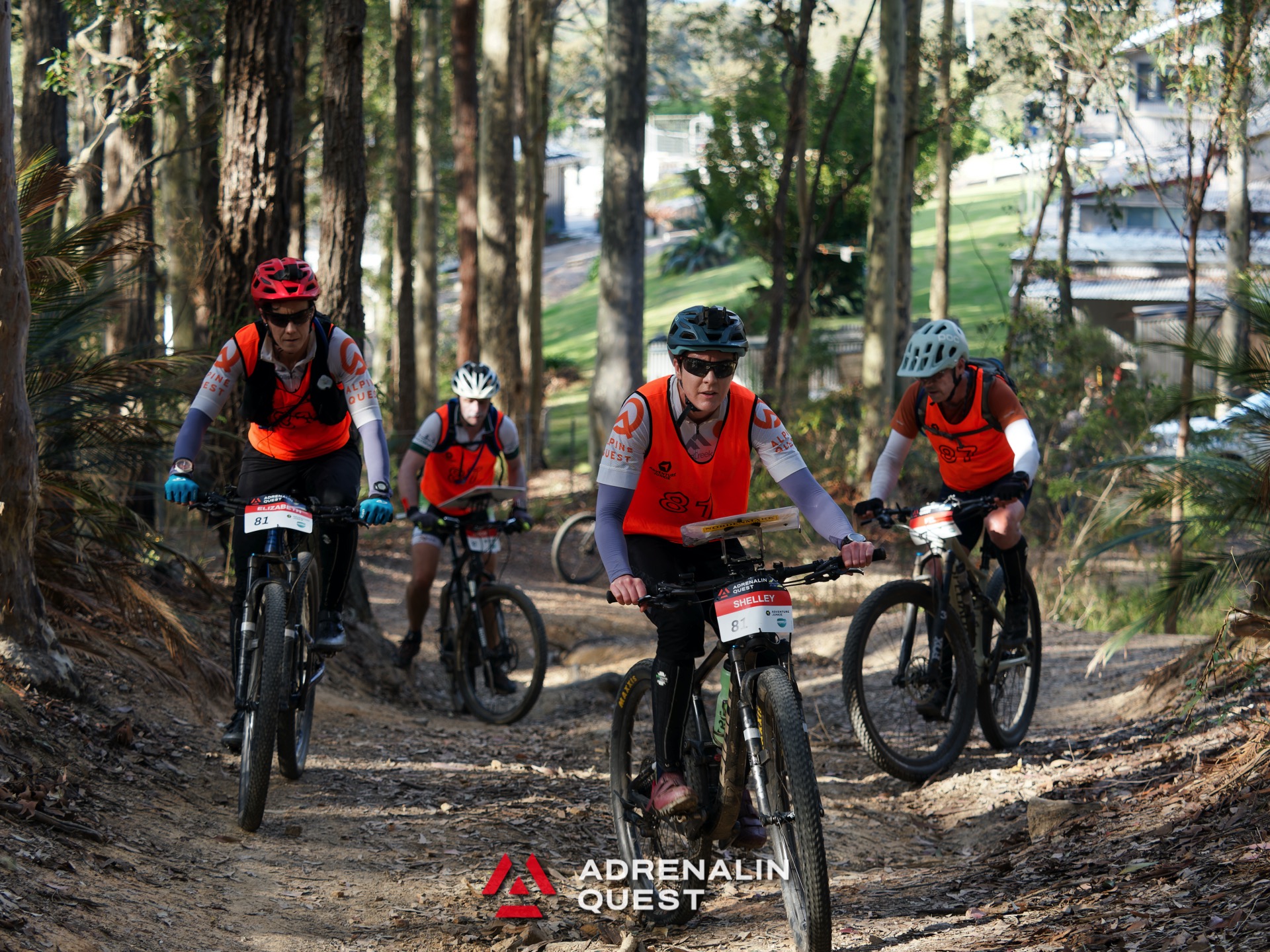
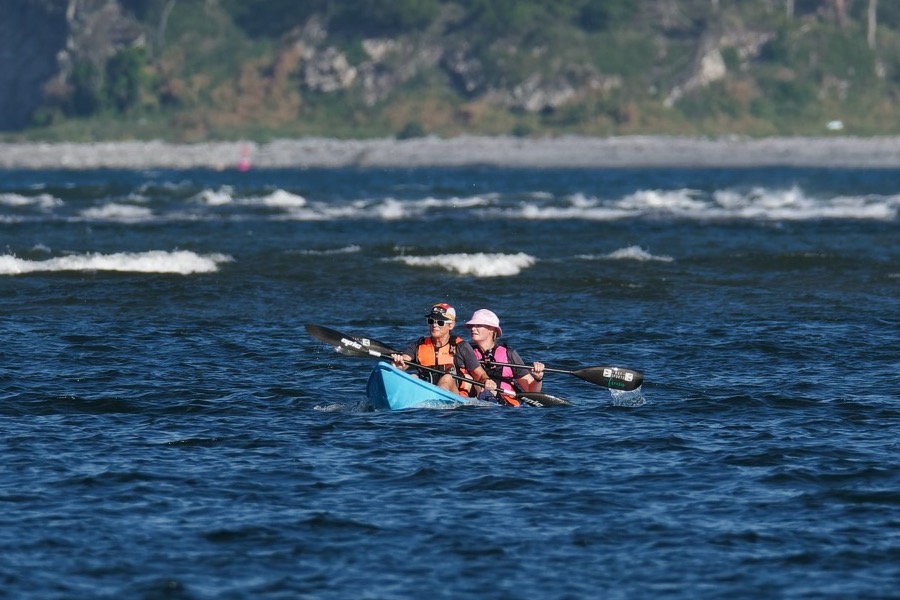
Teams must navigate on foot, by mountain bike, and by kayaks, depending on the course section. The fastest route is rarely the most obvious, and good decisions can be just as valuable as strong legs.
Some checkpoints will be mandatory, some optional (bonus) ones.
Transition Areas (TAs)
The race course includes Transition Areas (TAs) where teams switch disciplines and manage their equipment.
Transition Areas are managed by race volunteers and can operate in one of two ways:
Teams may pre-drop gear at a transition area before the race begins, or
Race organisers may transport team gear to the transition area on your behalf.
In all Transition Areas, volunteers are present to man the gear, ensure it is secure, and support smooth transitions. Teams simply arrive, change equipment, and continue racing.
Course Formats
Adrenalin Quest offers multiple course formats to suit different experience levels and ambitions.
Novice Course — One-Day Event- Sunday
Designed for newcomers to adventure racing or teams wanting a shorter, more accessible challenge.
The Novice course introduces core adventure racing skills — navigation, teamwork, and transitions — in a supportive, achievable format. It is ideal for first-time racers and those building confidence.
Classic Course — One-Day Event- Saturday
The Classic course is a longer, more demanding one-day race.
Teams can expect extended navigation legs, greater route-choice challenges, and a higher endurance requirement.
Epic Course — Stage Racing Format
The Epic course follows a stage racing format over three days.
Teams compete in three separate races, one per day. Each stage is timed individually, and the cumulative time across all stages determines the overall winner.
This format rewards consistency, recovery, smart pacing, and long-term strategy. A strong performance across all stages is more important than winning a single day.
Course Secrecy & Logistics
To keep the challenge pure and fair, the exact course details are kept secret until race day. Teams will not know the locations of control points or the final course layout in advance.
However, to allow proper preparation, teams will receive a Logistics Matrix approximately 10 days before the race.
This document provides essential information such as:
- Discipline order
- Transition area logistics
- Gear transport requirements
- Estimated stage durations
- The Logistics Matrix allows teams to plan food, equipment, clothing, and strategy — without revealing the course itself.
Adrenalin Quest is designed to reward preparation, adaptability, and teamwork. Whether you are taking on your first adventure race or committing to a multi-day stage race, the course will challenge you to think, move, and perform as a team in real terrain.
The approximate distances with or without bonus checkpoints
- Friday (Epic only): under 15 km
- Saturday (Epic and Classic): 50-75 km (paddle 5-8 km, trekking 15-20 km, MTB 30-45 km)
- Sunday (Epic and Novice): 18-27 km (paddle 3-5 km, trekking 5-8 km, MTB 10-14 km)